
Beginner Driver Education · Attention
Understanding Distractions Outside the Vehicle and Their Impact on Road Safety
Driviology Road Safety Education Team
What this actually means for you
Driving asks for your attention in a way almost nothing else in daily life does — full, continuous, and for the whole trip, not just the tricky parts. It is natural for the driver to be curious. It cannot be faked or crammed the night before a test. It is a habit you either build in your first months of driving or spend years unlearning the opposite.
Distractions Outside the Vehicle - Safety Awareness and Strategies
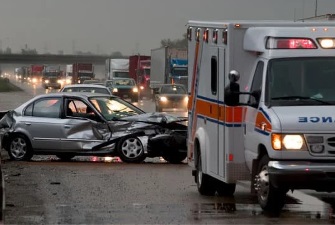
1. Accident scenes
Seeing the scene of an accident can be a massive distraction. It is natural for the driver to be curious.
However, it would help if the driver did not take their eyes off the road in an attempt to see the scene. Taking their eyes off the road will only cause another accident.
In some cases, if they are ‘rubberneck’ for too long, the police may even stop and give them a fine.

2. Billboards
Road-side Advertisements draw attention; despite this, good drivers know how to ignore and look past these.
The driver must concentrate on the road regardless of the situation.
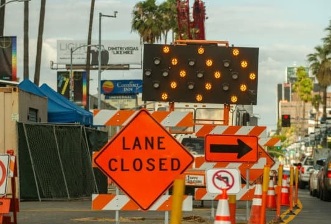
3. Construction
The driver must take special care when approaching a construction site. Significant and exciting machinery may be present, but the driver should not be distracted.
Look out for speed limit signs and workers.
4. Places of interest
Suppose the driver is driving in a historic or scenic area. In that case, it is best to come to a complete stop to enjoy the view thoroughly.
Do not try to soak in the beauty of the location while driving. Doing so may distract your eyes from the road for too long, which can be dangerous.
Did you know?
Having discussed the different types of distractions, the driver needs to know that we can divide distractions into three major categories;
1. Visual
These distractions cause them to take their eyes off the road.
Includes GPS, points of interest, billboards
2. Manual
These distractions can cause the driver to take their hands off the steering wheel, including mobile devices, to eat, drink, groom, apply makeup, and adjust the vehicle’s climate controls.
3. Cognitive
The driver’s brain causes these distractions.
For example, their brain may become lost in a train of thought, or they may start daydreaming.
The driver must take note of these and do their best to avoid them.
Using this on Ontario roads — and on your road test
Ontario law treats this seriously: distracted driving penalties are steep, and novice drivers face licence suspensions on top of fines. But the legal risk is honestly the smaller one — a car at 60 km/h covers the length of a basketball court in about two seconds, and a lot can step into that space. In the GTA the demands never stop: transit stops, cyclists, pedestrians looking at their own phones, delivery riders filtering through traffic. Set the car up before you move — seat, mirrors, phone away and silent, route planned — so that once you are rolling, your attention has only one job.
Questions drivers ask us
Can you explain distractions outside the vehicle and their impact on road safety in simple terms?
Taking their eyes off the road will only cause another accident.
What is the easiest way to protect my attention while driving?
Set the car up before you move: phone away and on silent, mirrors and seat adjusted, route entered, music chosen. Once you are rolling, every one of those small jobs competes with the road — and the road is the only one that can hurt you.
Can I fail a road test for looking at my phone?
Reaching for a phone while driving is a serious error and, on Ontario roads, a serious offence — for novice drivers it can mean a licence suspension, not just a fine. On a test, your phone should be away and silent from the moment you get in the car.