
Beginner Driver Education · Driver Behaviour
Approaches to Decision-Making in Driving
Driviology Road Safety Education Team
What this actually means for you
Driving is not really a steering task — it is a decision task, repeated hundreds of times per trip. Is that gap big enough?
Decision-Making Approaches for Safe Driving
Driving is a complex process requiring constant decision-making to navigate dynamic situations. Effective decision-making ensures compliance with traffic laws and reflects a driver's experience, personality, and values. Adopting specific approaches can help drivers make informed, responsible, and safe decisions on the road.
Critical Approaches to Decision-Making While Driving
1. Defensive Driving
This approach emphasizes anticipating and avoiding potential hazards by staying vigilant and proactive.
- How it Works: Drivers practicing defensive driving continuously scan their surroundings for risks such as reckless drivers, road debris, or adverse weather conditions.
- Impact: Anticipating and preparing for hazards reduces the likelihood of collisions and keeps drivers safer.
2. Risk Management
Risk management involves evaluating the risks and benefits of various driving behaviours and choosing safety over convenience.
- How it Works: A driver might feel tempted to speed when running late. A risk-management approach weighs the higher likelihood of an accident against the time saved and opts for safer driving habits.
- Impact: This approach minimizes reckless behaviours and ensures safety remains the top priority.
3. Situational Awareness
Situational awareness focuses on staying alert to changing conditions and responding appropriately to the environment.
- How it Works: A driver approaching an intersection must assess when to stop, navigate turns, and anticipate the movements of pedestrians and other vehicles.
- Impact: This approach helps drivers make real-time decisions based on their surroundings, avoiding potential conflicts or accidents.
4. Impaired Driving Prevention
This approach involves making responsible decisions to prevent driving under the influence of drugs or alcohol.
- How it Works: Drivers aware of the dangers of impaired driving plan alternatives, such as arranging for taxis, rideshare services, or public transportation.
Impact: Preventing impaired driving reduces the risk of collisions and protects all road users.
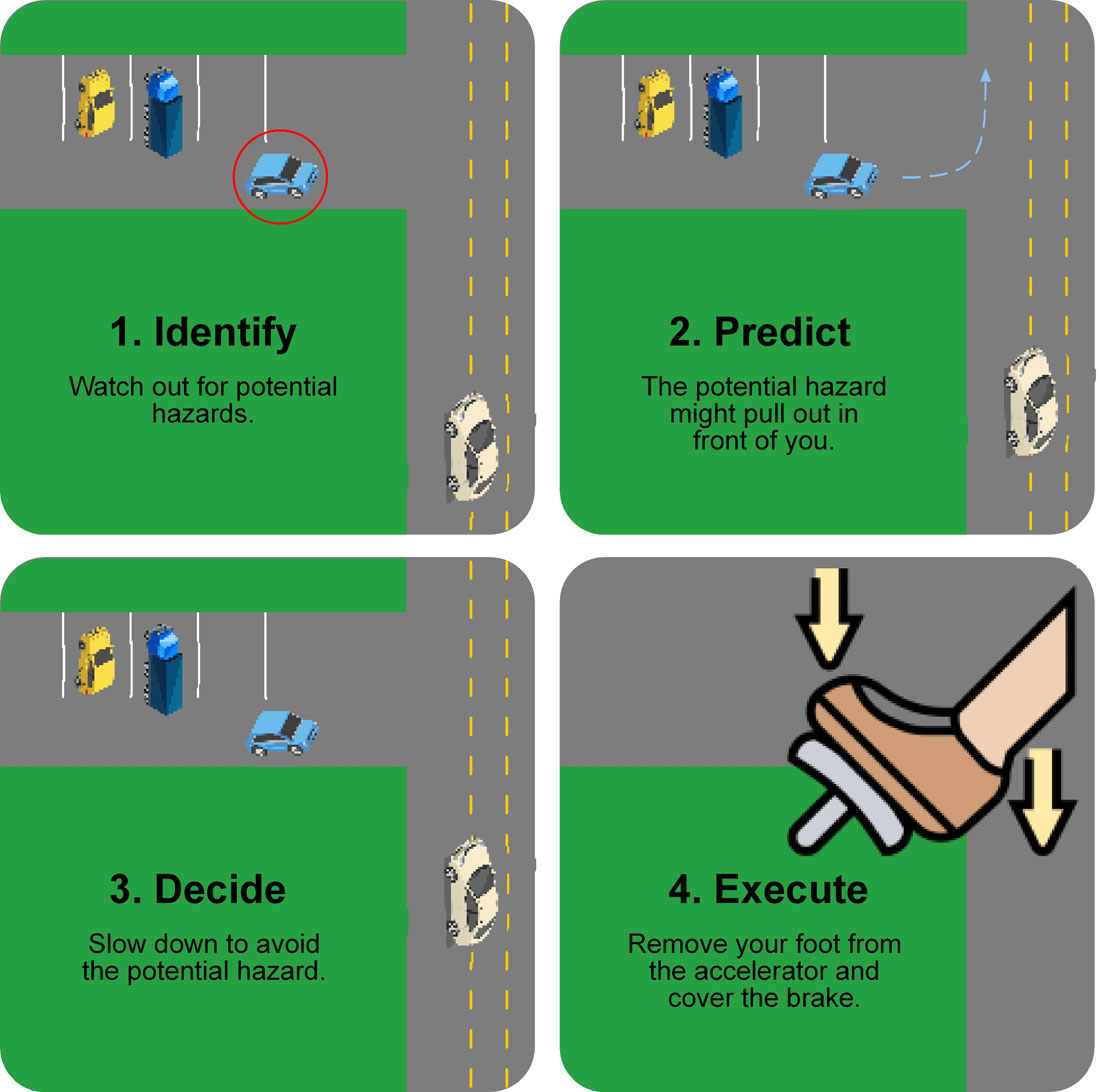
The Decision-Making Process
Effective decision-making involves a multi-step thought process to evaluate options and consequences:
- Identify: Recognize potential hazards or decisions to be made.
- Predict: Anticipate possible outcomes and risks associated with each option.
- Decide: Choose the safest and most responsible course of action.
- Execute: Act on the decision promptly and effectively.
This I.P.D.E. (Identify, Predict, Decide, Execute) approach ensures drivers systematically address risks and make informed choices.
Conclusion:
The approach to decision-making while driving is influenced by factors such as the driving environment, road conditions, and personal habits. By adopting responsible and proactive strategies such as defensive driving, risk management, situational awareness, and impaired driving prevention, drivers can significantly reduce risks and foster a positive driving culture. Making informed and deliberate decisions is critical to ensuring safety for everyone on the road.
Using this on Ontario roads — and on your road test
This is the difference examiners see between a nervous G2 candidate and a calm one. The nervous driver decides late, at the intersection, in a rush.
Questions drivers ask us
What is a good decision-making process for driving?
A simple loop: identify the possible hazard, predict what it could do, decide your response, and execute it smoothly.
How do I stop making last-second decisions?
Look further ahead. Most 'sudden' decisions were visible ten seconds earlier — scanning buys you the time to decide calmly.
What do examiners actually check for in my decisions?
Timing and quality: that you noticed early, chose the safe option, and carried it out smoothly — especially at intersections, merges, and lane changes.