
Beginner Driver Education · Rules of the Road
Understand Ontario's Licensing Requirements for Drivers
Driviology Road Safety Education Team
What this actually means for you
This is the kind of rule that is easy to nod at in a classroom and then get wrong at a real intersection, so it pays to understand what it actually requires of you. When on the road, it is vital to ensure the driver owns a valid licence for the vehicle they are operating. Learn it as a habit now, not as a fact to recall, because at a real intersection there is only time for the habit.
Licensing Requirements for Drivers in Ontario | Rules of the Road
When on the road, it is vital to ensure the driver owns a valid licence for the vehicle they are operating. When on the street, ensure that the driver has the following documents in possession:
- Driver licence
- Proof of insurance
- Vehicle Registration papers
If a police officer stops the driver, they must present these documents upon request. Failure to do so could result in multiple traffic tickets affecting the driver’s driving history.
Driving Licence Classification:
| Class | May Also Drive in Class | Vehicle Type |
|---|---|---|
| B | C, D, E, F and G | Any school purposes bus. |
| A | D and G | Any tractor-trailer combination. |
| C | D, F and G | Any regular bus. |
| E | F and G | any school purposes bus - maximum of 24-passenger capacity. |
| D | G | Any truck. |
| F | G | Any regular bus - maximum of 24-passenger capacity - and ambulances. |
| M | G | Any motorcycle, including motor tricycles. |
| G | None | Allowed to drive any car, van or small truck. |
| Variant Class | Level | Vehicle Type |
|---|---|---|
| M2 | Level Two of graduated licensing for motorcycles | Holders may drive a motorcycle and class G vehicle. |
| M1 | Level One of graduated licensing for motorcycles | Holders may drive a motorcycle under certain conditions. |
| G1 | Level One of graduated licensing | Holders may drive Class G vehicles. |
| G2 | Level Two of graduated licensing | Holders may drive Class G vehicles. |
| M with L condition | - | Holders may operate a limited-speed motorcycle or moped only. |
| M2 with L condition | - | Holders may operate a limited-speed motorcycle or moped only. |
| M with M condition | - | Holders may operate a motor tricycle only. |
| M2 with M condition | - | Holders may operate a motor tricycle only. |
Source: https://www.ontario.ca/document/official-mto-drivers-handbook/getting-your-drivers-licence
Requirements for driving in Ontario:
To drive in Ontario, residents must be at least 16 years old and have a valid Ontario-issued driver’s licence.
Visitors who wish to drive in Ontario must be at least 16 years old and have a valid driver's licence from their Province, state, or country. If someone visits Ontario for more than three months, they need an International Driver's Permit from/issued by their government.
New residents to Ontario with a valid driver's licence from another province, state or country can use it for 60 days after the driver moves to Ontario.
If the driver becomes a permanent resident of Ontario, they must obtain an Ontario driver’s licence.
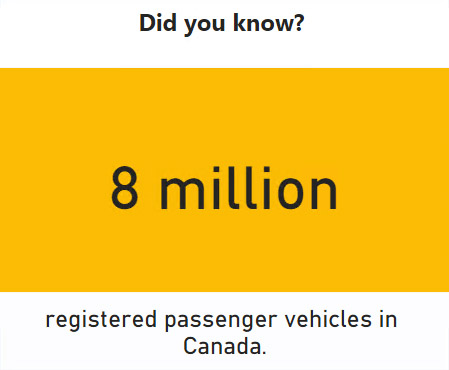
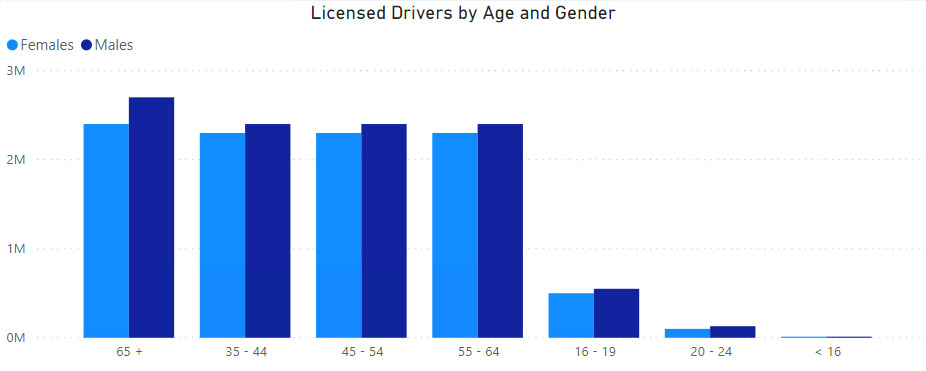
Source: https://tests.ca/driving-statistics/.
Using this on Ontario roads — and on your road test
This is not just written-test material. The same rules are scored live on your G2 and G road tests, and most of them come up in the first five minutes: stops, turns, lane use, and right-of-way at ordinary intersections. In the GTA you will meet the full set quickly — HOV lanes on the 401 and QEW, reserved streetcar and bus lanes downtown, school zones with reduced limits, and construction signage that changes a road week to week. Learn the rule as a behaviour, not a definition, and it will still be working for you years after the test.
Questions drivers ask us
Can you explain Ontario's licensing requirements for drivers in simple terms?
To drive in Ontario, residents must be at least 16 years old and have a valid Ontario-issued driver’s licence.
What happens if I get this wrong on the road?
It depends on the rule, but traffic offences in Ontario can bring a fine and demerit points, and they stay on your driving record. For new drivers the stakes are higher — repeat or serious offences can lead to a licence suspension, on top of what they do to your insurance.
Do I need to know this for the G1 written test too?
Yes — this is core G1 knowledge, and it is tested again in real life on the G2 and G road tests. The written test checks that you know the rule; the road test checks that you actually do it when nobody is prompting you.