
Beginner Driver Education · Rules of the Road
Understanding Road Markings: Types and Importance
Driviology Road Safety Education Team
What this actually means for you
Road markings are the instructions painted on the road itself. Signs get most of the attention when students study for the G1, but once you are actually driving, the lines under your wheels are what tell you — second by second — where you may go, where you must stop, and whether passing is allowed.
Road Markings: Types, Functions, and Safety Tips
Almost all roads feature markings that drivers must observe. These markings have specific purposes to direct and maintain orderly traffic flow.
Below are the key types of road markings and their functions:
- Road Divisions: Indicate how streets are divided and separate traffic lanes.
- Directional Indicators: Show turning lanes and guide drivers on appropriate paths.
- Pedestrian Crossings: Mark areas designated for pedestrians to cross safely.
- Obstacles and Passing Information: Warn about obstacles and indicate when it is safe to pass.
Pavement markings and traffic lights provide essential information to ensure safe and efficient travel for all road users.
Types of Road Markings in Ontario and Their Significance:
- White lines:
White lines on the road separate lanes of traffic moving in the same direction. They provide clear guidance to drivers, helping to maintain orderly traffic flow and prevent collisions.
Single solid white line: Lane changes are prohibited over a single solid line. Crossing these lines should be avoided unless necessary, such as when entering a driveway.

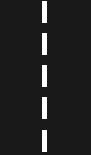
Single broken white line: A single broken line allows lane changes, but only when it is safe. These lines typically separate two lanes of traffic travelling in the same direction.
Double solid white lines: These lines indicate that lane changes are prohibited. They are often found in areas where lane changes, such as tunnels or bridges, would be hazardous.

Thick white top line: A thick white stop line indicates where vehicles must stop at intersections or pedestrian crossings, ensuring safe stopping distances and clear visibility for pedestrians and oncoming traffic.
- Yellow lines:
Yellow lines on the road separate lanes of traffic moving in opposite directions or divide traffic lanes from sidewalks. They provide clear visual guidance to help prevent head-on collisions and ensure that vehicles stay within their designated areas.
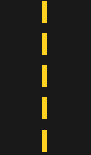
Single broken yellow line: A single broken yellow line indicates that passing or overtaking is permitted for drivers in either direction.
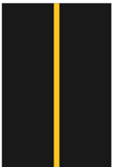
Single solid yellow line: A single solid yellow line indicates that passing is allowed in both directions but requires extreme caution.
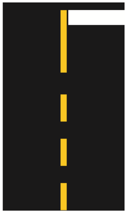
Broken yellow line and solid yellow line together: When a broken yellow line is paired with a solid yellow line, the driver on the side with the solid line may not pass. However, the driver on the side with the broken line may pass when it is safe.
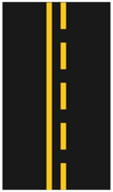
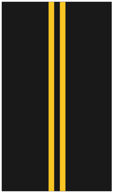
Double yellow solid line: A double solid yellow line indicates that passing is prohibited in either direction.
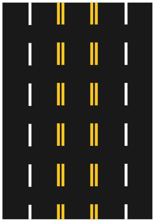
Double broken yellow line: A double broken yellow line, though uncommon, indicates a reversible lane. A lane control system will inform drivers whether the lane is available.
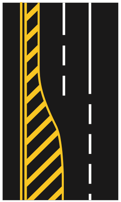
Painted island: A painted island is indicated with thick yellow lines. Drivers should keep to the right and not drive on or over the island.
- Crosswalks: Crosswalks are designated areas where pedestrians have the right to cross safely. They are marked with distinctive lines and symbols to alert both drivers and pedestrians to their presence.
Slotted pedestrian crosswalk: Stop for pedestrians at slotted pedestrian crosswalks, identified by their distinctive slotted markings.
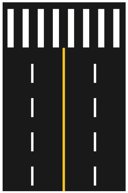
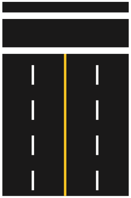
Solid pedestrian crosswalk: Drivers must stop for pedestrians at solid pedestrian crosswalks, just as they would at slotted crosswalks. The critical difference is the border markings.
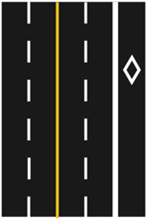
- Reserved lanes: Reserved lanes, identified by a thicker white line and a diamond symbol, are designated for high-occupancy vehicles, emergency vehicles, or cyclists. Unauthorized vehicles are prohibited from using these lanes, and violations can result in fines or demerit points.
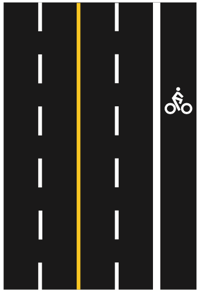
- Bicycle lane: Bicycle lanes, marked by a thick white line and a cyclist logo, are exclusively reserved for bicycles. Other vehicles are not permitted to enter these lanes under any circumstances.
Using this on Ontario roads — and on your road test
In the GTA this shows up everywhere: the solid line on a two-lane road in Scarborough you must not cross to pass, the painted island outside a plaza on Lawrence Avenue, the reserved-lane diamonds downtown. On a G2 or G test, examiners watch whether you position the car correctly at stop lines and crosswalks and whether you respect lane markings at intersections — drifting over a line or stopping on a crosswalk is an easy mark to lose, and an easy one to avoid once markings become a habit you read early, not at the last second.
Questions drivers ask us
What is the difference between a solid and a broken line?
A solid line means stay in your lane — do not cross it to pass. A broken line means you may cross when it is safe and legal to do so.
Can you fail your G2 for crossing a solid line?
Crossing a solid line to pass is a traffic violation, and on a road test it counts as a serious error.
What does a yellow line mean in Ontario?
Yellow lines separate traffic travelling in opposite directions. White lines separate lanes going the same way, or mark the edge of the road.
What is a painted island?
It is a section of road painted with diagonal lines, usually between lanes or at an intersection.