
Beginner Driver Education · Sharing the Road
Safe Passing Practices on Ontario Roads
Driviology Road Safety Education Team
What this actually means for you
Passing is one of the highest-risk things a driver does on purpose: you leave your lane, travel on the wrong side or alongside another vehicle, and come back — all in a few seconds. Done patiently and rarely, it is a normal skill.
Passing Safely: A Guide to Responsible Overtaking
There will be instances when the driver must overtake another vehicle; they must be cautious and respectful. Failure to do so can cause accidents.

1. Check your surroundings:
Check the lines on the road ahead. A single striped line means the driver is not allowed to pass. A single dashed yellow line on the driver's side of the road means it is permitted to pass.
Also, check that the driver is not in a school zone, construction zone, or near a blind corner. The driver should never overtake in these instances.
Check that nothing like a tunnel may obstruct the driver's view of the road ahead once the driver overtakes.
Also, be sure to note the weather conditions. These may increase the stopping distances and reduce the driver's ability to control the vehicle.
a. Mirrors:
Check for other vehicles in the driver’s surroundings, check behind and do not forget to check the blind spots.
b. Speed limit:
Note the area's speed limit; the driver must not go over the speed limit while overtaking.
c. Back-up plan:
Ensure that the driver can safely merge back into traffic if the driver cannot overtake.
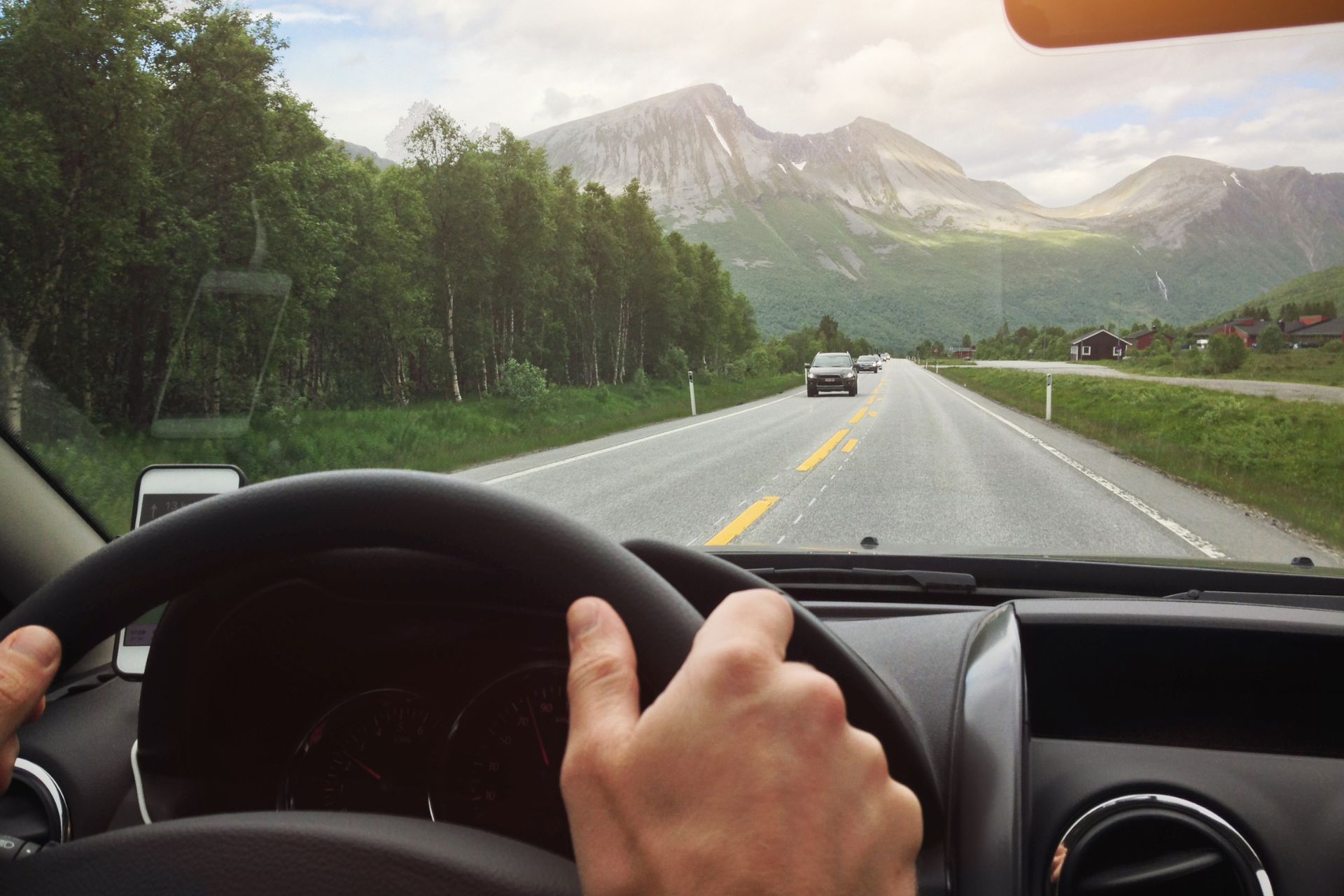
2. Passing:
When passing another vehicle on Ontario roads, drivers should follow these steps to ensure safety:
Signal Intentions: Always signal that you intend to pass to alert other drivers of your intentions.
Accelerate Gradually: Apply the accelerator slowly and steadily to pass the vehicle. Avoid sudden moves or abrupt acceleration.
Keep Both Hands on the Wheel: Maintain both hands on the steering wheel to ensure complete vehicle control during the passing maneuver.
Check for Oncoming Traffic: Look ahead to ensure no vehicle is approaching from the opposite direction before proceeding with the pass.
Rejoining the Lane: Once you have passed the vehicle, ensure you are clear before merging back into the lane. Do not turn into the lane too soon to avoid colliding with the vehicle you overtook.
Passing Trucks: Be particularly cautious when passing trucks. They have more prominent blind spots, and you may be hidden from their view when merging.
Maintain Speed: After passing, maintain a constant speed. Do not slow down immediately, as this can impede the vehicle you have just passed.
Following these guidelines, drivers can ensure that passing maneuvers are conducted safely and responsibly, minimizing risks for all road users.
Using this on Ontario roads — and on your road test
In Ontario, most of your passing will be on highways and two-lane roads outside the city, where oncoming speed is easy to underestimate. Check the markings first — a solid line says no — then mirrors, signal, blind spot, and only pass with a clear view and far more room than feels minimally necessary.
Questions drivers ask us
When am I allowed to pass another vehicle?
When the road markings permit it, you have a clear view ahead, and you can complete the pass safely within the speed limit.
How do I pass safely step by step?
Check the markings and the road ahead, check mirrors, signal, check your blind spot, move over smoothly, pass without crowding, signal, check again, and return when you can see the passed vehicle in your rear-view mirror.
Can you fail your G test for a bad pass?
Yes — an unsafe pass or poor passing judgement is a serious error. Examiners would much rather see a driver choose not to pass than force a marginal one.