
Beginner Driver Education · Attention
Understanding Distractions Inside the Vehicle: A Safety Guide
Driviology Road Safety Education Team
What this actually means for you
Driving asks for your attention in a way almost nothing else in daily life does — full, continuous, and for the whole trip, not just the tricky parts. While driving, the driver may get thirsty or hungry, which is natural. It cannot be faked or crammed the night before a test. It is a habit you either build in your first months of driving or spend years unlearning the opposite.
Distractions Inside the Vehicle: Causes and Solutions

1. Food and drinks
While driving, the driver may get thirsty or hungry, which is natural.
How the driver drinks or eats, however, is what matters.
Taking their hand off the wheel to eat or lifting their head to take a sip of water can cause the driver to look away from the road. Looking out for even a fraction of a second can result in an accident.
If the driver wants to eat or drink, safely stop on a safe part of the road and drink (not alcohol).
The driver can face fines if they are caught.
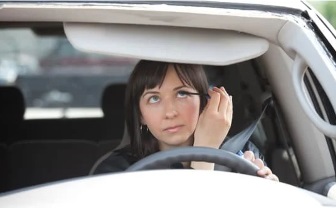
2. Makeup
Many drivers, especially workers or students, will encounter situations where they need to get to their destination. This may call for improvisation, and hence, they may have to do their makeup in the vehicle.
The driver must not do this while driving.
If the driver ever has to groom themselves or apply makeup, ensure they have come to a complete stop; only then can they do so.
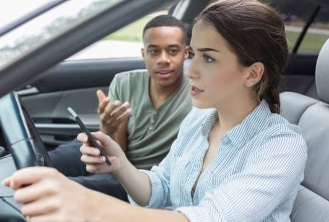
3. Other passengers
Other occupants in the vehicle, especially children, may tend to distract the driver from the road.
It is essential to realize the responsibility a person has as a driver.
If the driver needs to communicate with a passenger who is disruptive to their driving, make sure to do this when the vehicle can stop safely.
Do not turn to look at children in the back seats; this will cause the driver to take their eyes away from the road and quickly turn into an accident.
4. Pets
Similar to other passengers, make sure any dog is well tended to and in a comfortable position before driving off.
The driver should not tend to pets while driving on the road, as this can cause them to take their eyes and hands off the wheel and the road, which can be dangerous.
5. Insects
Insects, rodents, and pests inside the vehicle may cause panic and distraction.
If the driver spots any unwanted insects, safely stop as soon as possible and try to get rid of them before continuing.
6. Music
Though music can keep the driver calm and collected, it is still limited.
Music can distract the driver from their responsibilities as a driver.
Also, listening to music at loud volumes can distract the driver from other vehicles and road users. They will be unable to hear them coming towards them, which can be dangerous.
7. Climate control
Removing their eyes from the road to modify their climate control settings is a bad idea.
Suppose they want to change any vehicle settings. In that case, the driver must stop so as not to distract themselves from the road. This rule applies to any vehicle-related controls, including comfort-based controls and non-essential controls.
8. Mobile devices
The most significant contributor to distractions is likely mobile devices because they are designed to attract attention.
The driver must not fall for this when driving.
If the driver must pick up a call, use the hands-free mode. They can use a headset or link it to their vehicle. However, it is not ideal as it will still distract them.
It is unlawful to utilize a handheld device while driving; they can get a fine or lose their licence if convicted.
The best way to manage mobile devices when driving is by:
- Putting it in silent or do not disturb mode
- Let calls go to voice mail
- Use auto-reply features
- Let a passenger pick up the call
- Come to a safe stop and attend to the call

Discussion Forum Activity - Hands-free phone laws
From a road safety perspective, hands-free phone laws can help reduce the likelihood of accidents caused by holding and dialling a mobile phone. These laws also clearly state that distracted driving is unacceptable, and drivers should prioritize their attention to the Road.
While hands-free phone laws have limitations, they are a positive step toward reducing driver distraction and improving road safety.
Do you agree that these laws help to send a clear message that distracted driving is unacceptable and that drivers must prioritize their attention to the road to avoid accidents? Why? Do you have any statistics to share?
Click here to go to the Discussion Forum.
Using this on Ontario roads — and on your road test
Ontario law treats this seriously: distracted driving penalties are steep, and novice drivers face licence suspensions on top of fines. But the legal risk is honestly the smaller one — a car at 60 km/h covers the length of a basketball court in about two seconds, and a lot can step into that space. In the GTA the demands never stop: transit stops, cyclists, pedestrians looking at their own phones, delivery riders filtering through traffic. Set the car up before you move — seat, mirrors, phone away and silent, route planned — so that once you are rolling, your attention has only one job.
Questions drivers ask us
Can you explain distractions inside the vehicle in simple terms?
This may call for improvisation, and hence, they may have to do their makeup in the vehicle.
What is the easiest way to protect my attention while driving?
Set the car up before you move: phone away and on silent, mirrors and seat adjusted, route entered, music chosen. Once you are rolling, every one of those small jobs competes with the road — and the road is the only one that can hurt you.
Can I fail a road test for looking at my phone?
Reaching for a phone while driving is a serious error and, on Ontario roads, a serious offence — for novice drivers it can mean a licence suspension, not just a fine. On a test, your phone should be away and silent from the moment you get in the car.