
Beginner Driver Education · Rules of the Road
Understanding Regulatory Signs: Essential Road Rules
Driviology Road Safety Education Team
What this actually means for you
Rules like this are not trivia for the written test. They decide what you do in the two or three seconds when there is no time to think. Do not stop in the area between the signs. On the road test, this is scored every single time it comes up — not once, but as a pattern across the whole drive.
Regulatory Signs: Key Traffic Regulations for Safety
Regulatory Signs
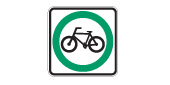
This road is an official bicycle route. Watch for cyclists and be prepared to share the road with them.
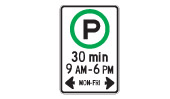
You may park in the area between the signs during the times posted. (Used in pairs or groups.)
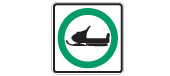
Snowmobiles may use this road.
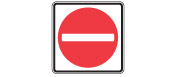
Do not enter this road.
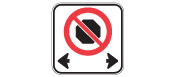
Do not stop in the area between the signs. This means you may not stop your vehicle in this area, even for a moment. (Used in pairs or groups.)
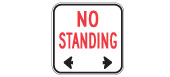
Do not stand in the area between the signs. This means you may not stop your vehicle in this area except while loading or unloading passengers. (Used in pairs or groups.)
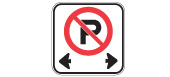
Do not park in the area between the signs. This means you may not stop your vehicle except to load or unload passengers or merchandise. (Used in pairs or groups.)
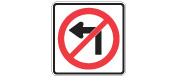
Do not turn left at the intersection.
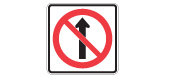
Do not drive through the intersection.
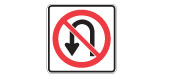
Do not turn to go in the opposite direction. (U-turn)
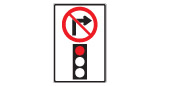
Do not turn right when facing a red light at the intersection.
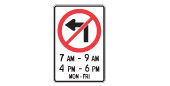
Do not turn left during the times shown.
Using this on Ontario roads — and on your road test
Ontario's rules are enforced as written, and 'everyone does it' is not a defence — rolling stops, creeping into crosswalks, and casual lane changes are everyday sights in Toronto traffic and everyday reasons people collect tickets and demerit points. The standard that keeps you safe is the same one examiners mark to: full stops, correct lanes chosen early, and signals that actually communicate something to the drivers around you. Drive to the rule, not to the traffic around you.
Questions drivers ask us
Can you explain regulatory signs in simple terms?
Do not stand in the area between the signs.
What should new drivers know about regulatory signs?
This road is an official bicycle route. Watch for cyclists and be prepared to share the road with them.
Do I need to know this for the G1 written test too?
Yes — this is core G1 knowledge, and it is tested again in real life on the G2 and G road tests. The written test checks that you know the rule; the road test checks that you actually do it when nobody is prompting you.