
Beginner Driver Education · Rules of the Road
Understanding Regulatory Signs: Essential Rules of the Road
Driviology Road Safety Education Team
What this actually means for you
Rules like this are not trivia for the written test. They decide what you do in the two or three seconds when there is no time to think. This parking space is only for vehicles displaying a valid Accessible Parking Permit. Learn it as a habit now, not as a fact to recall, because at a real intersection there is only time for the habit.
Regulatory Signs: Key Rules of the Road in Canada
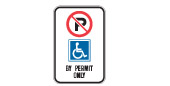
This parking space is only for vehicles displaying a valid Accessible Parking Permit.
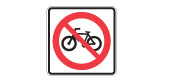
No bicycles allowed on this road.
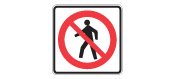
No pedestrians allowed on this road.
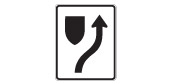
Keep to the right of the traffic island.
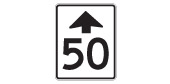
Speed limit changes ahead.
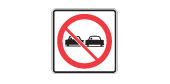
Do not pass on this road.
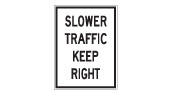
Slow traffic on multi-lane roads must keep right.
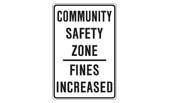
Indicates areas where the community has identified that there is a special risk to pedestrians. Traffic related offences committed within the zone are subject to increased fines.
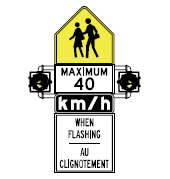
The speed limit in this zone is lower during school hours. Observe the speed limit shown when the yellow lights are flashing.
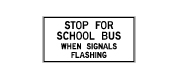
Stop for school bus when signals are flashing.
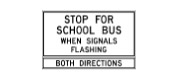
This sign is installed on multi-lane highways with no centre median divider. It informs drivers approaching from both directions that they must stop for a school bus when its signal lights are flashing.
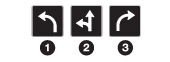
These signs, above the road or on the pavement before an intersection, tell drivers the direction they must travel. For example: the driver in lane one must turn left; the driver in lane two must turn left or go straight ahead; and the driver in lane three must turn right.
Using this on Ontario roads — and on your road test
This is not just written-test material. The same rules are scored live on your G2 and G road tests, and most of them come up in the first five minutes: stops, turns, lane use, and right-of-way at ordinary intersections. In the GTA you will meet the full set quickly — HOV lanes on the 401 and QEW, reserved streetcar and bus lanes downtown, school zones with reduced limits, and construction signage that changes a road week to week. Learn the rule as a behaviour, not a definition, and it will still be working for you years after the test.
Questions drivers ask us
Can you explain regulatory signs in simple terms?
These signs, above the road or on the pavement before an intersection, tell drivers the direction they must travel.
What happens if I get this wrong on the road?
It depends on the rule, but traffic offences in Ontario can bring a fine and demerit points, and they stay on your driving record. For new drivers the stakes are higher — repeat or serious offences can lead to a licence suspension, on top of what they do to your insurance.
Do I need to know this for the G1 written test too?
Yes — this is core G1 knowledge, and it is tested again in real life on the G2 and G road tests. The written test checks that you know the rule; the road test checks that you actually do it when nobody is prompting you.