
Beginner Driver Education · Rules of the Road
Understanding Warning Signs: Paved Surface, Bicycle Crossings, and More
Driviology Road Safety Education Team
What this actually means for you
Rules like this are not trivia for the written test. They decide what you do in the two or three seconds when there is no time to think. The share the road sign is used to warn motorists that they are to provide safe space on the road for cyclists and other vehicles. On the road test, this is scored every single time it comes up — not once, but as a pattern across the whole drive.
Warning Signs: Essential Road Safety Information
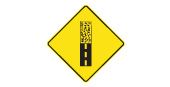
Paved surface ends ahead.
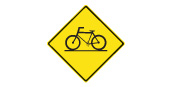
Bicycle crossing ahead.
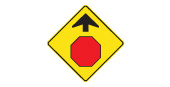
Stop sign ahead. Slow down.
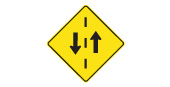
Share the road with oncoming traffic.
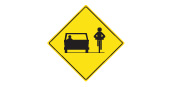
The share the road sign is used to warn motorists that they are to provide safe space on the road for cyclists and other vehicles. This sign also warns motorists and cyclists to exercise additional caution on the upcoming section of road.
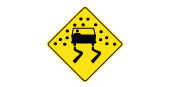
Pavement is slippery when wet. Slow down and drive with caution.
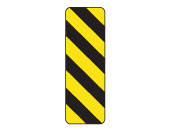
Hazard close to the edge of the road. The downward lines show the side on which you may safely pass.
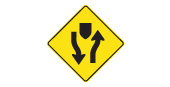
Divided highway begins: traffic travels in both directions on separated roads ahead. Keep to the right-hand road. Each road carries one-way traffic.
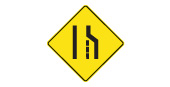
Right lane ends ahead. If you are in the right-hand lane, you must merge safely with traffic in the lane to the left.
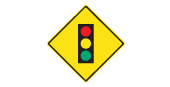
Traffic lights ahead. Slow down.
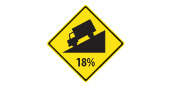
Steep hill ahead. You may need to use a lower gear.
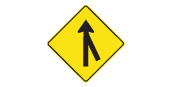
Two roads going in the same direction are about to join into one. Drivers on both roads are equally responsible for seeing that traffic merges smoothly and safely.
Using this on Ontario roads — and on your road test
Ontario's rules are enforced as written, and 'everyone does it' is not a defence — rolling stops, creeping into crosswalks, and casual lane changes are everyday sights in Toronto traffic and everyday reasons people collect tickets and demerit points. The standard that keeps you safe is the same one examiners mark to: full stops, correct lanes chosen early, and signals that actually communicate something to the drivers around you. Drive to the rule, not to the traffic around you.
Questions drivers ask us
Can you explain warning signs in simple terms?
If you are in the right-hand lane, you must merge safely with traffic in the lane to the left.
What happens if I get this wrong on the road?
It depends on the rule, but traffic offences in Ontario can bring a fine and demerit points, and they stay on your driving record. For new drivers the stakes are higher — repeat or serious offences can lead to a licence suspension, on top of what they do to your insurance.
Do I need to know this for the G1 written test too?
Yes — this is core G1 knowledge, and it is tested again in real life on the G2 and G road tests. The written test checks that you know the rule; the road test checks that you actually do it when nobody is prompting you.