
Beginner Driver Education · Vehicle Handling
Essential Tips for Highway and Freeway Driving
Driviology Road Safety Education Team
What this actually means for you
This is car control at its most basic, and it is worth understanding properly instead of just copying what an instructor tells you. Highways, also known as expressways, are multi-lane, high-speed roads. Get this right and the car starts doing what you expect, when you expect it — which is most of what confidence behind the wheel is built on.
Highway and Freeway Driving Tips for New Drivers
Highways, also known as expressways, are multi-lane, high-speed roads.
These roads are usually terrifying for new drivers, but with practice and experience, drivers will learn.
Note: G1 drivers are prohibited from freeways without a licensed driving instructor.
Entering a freeway:
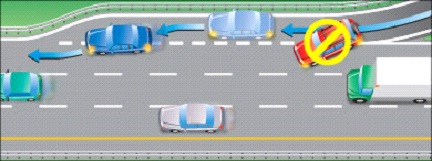
The driver will usually enter a freeway through an entrance ramp, and these ramps lead to an acceleration lane.
When entering the entrance ramp, indicate and check the mirrors and blind spots.
While in the acceleration lane, check the sides again and slowly merge into the highway to keep up with other vehicles' speed on the freeway. Avoid braking and stopping as much as possible.
Vehicles already on the freeway must give the right-of-way to merge onto the highway.
Driving on the freeway:
Once on the freeway, maintain a constant speed and pay attention to the road.
Traffic should keep to the right side, using the left lanes for passing slower vehicles.
Be sure to change lanes as instructed in the previous chapter.
Please keep a safe distance from the other vehicles. Stay clear of large vehicles.
Leaving the freeway:
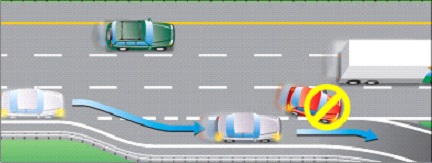
When the driver wants to exit a freeway, indicate the turn well before the exit and enter the correct lane for the exit.
Do not skip lanes at the last second. Gradually turn the deceleration lane and slow down.
HOV lanes (High Occupancy Vehicle):
High Occupancy Vehicles (HOV) are dedicated lanes for vehicles carrying a specific number of occupants.
These lanes encourage carrying more people in fewer cars and reduce the number of vehicles on the road.
If the vehicle is not an HOV, avoid HOV lanes. If a police officer fails to follow the rules and stops the driver, the driver could get a ticket or fines.

Discussion Forum Activity
As a Driver, what tips do you have for other drivers? Please share your tips in this forum under "Tips for Making Turns."
Click here to go to the Discussion Forum.
Using this on Ontario roads — and on your road test
Ontario makes this real very quickly. A manoeuvre that feels easy on a dry Markham side street in June behaves differently on a slushy Scarborough road in February, and the difference is always in how smoothly you ask the car to work. Practise the technique slowly first — in an empty lot or a quiet street — until the movements are boring. On a G2 or G test, examiners are watching for exactly that: smooth, planned control, with no sudden grabs at the wheel or stabs at the pedals when something surprises you.
Questions drivers ask us
Can you explain essential tips for highway and freeway driving in simple terms?
The driver will usually enter a freeway through an entrance ramp, and these ramps lead to an acceleration lane.
What should new drivers know about driving on the freeway?
Once on the freeway, maintain a constant speed and pay attention to the road.
Will this come up on my G2 or G road test?
Very likely, yes. Handling is scored throughout the test — steering smoothness, speed control, braking, and how you position the car. Examiners are not looking for perfection; they are looking for calm, planned control, and for mistakes to be small and corrected early.
What should new drivers know about leaving the freeway?
When the driver wants to exit a freeway, indicate the turn well before the exit and enter the correct lane for the exit.