
Beginner Driver Education · Vehicle Handling
Understanding Parking Brakes: Types and Usage
Driviology Road Safety Education Team
What this actually means for you
This is car control at its most basic, and it is worth understanding properly instead of just copying what an instructor tells you. It is found on the far left of the foot pedals. Get this right and the car starts doing what you expect, when you expect it — which is most of what confidence behind the wheel is built on.
Parking Brake Guide: Types, Usage & Safety Tips
There are different kinds of parking brakes.
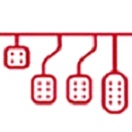
Pedal brake
It is found on the far left of the foot pedals. Push it inwards until you hear a click, which signifies that it is activated.

Lever brake
It is found between the two passengers. Pull it upwards until you hear the sound of a click, which signifies that it is activated.

Push-button
An electric button located on the console engages the e-brake.
When to use the parking brake:
When parking, one must always use the parking brake.
Other instances include intersections, on hills, or if the primary brakes fail.
Unlike common perception, the driver should put the parking brake on before putting the car in Park.
If facing downhill, place the vehicle in reverse in a manual car. If facing uphill, put the vehicle in first. This way, if the parking brake fails, the engine’s resistance will hold the vehicle in place.
Using this on Ontario roads — and on your road test
Ontario makes this real very quickly. A manoeuvre that feels easy on a dry Markham side street in June behaves differently on a slushy Scarborough road in February, and the difference is always in how smoothly you ask the car to work. Practise the technique slowly first — in an empty lot or a quiet street — until the movements are boring. On a G2 or G test, examiners are watching for exactly that: smooth, planned control, with no sudden grabs at the wheel or stabs at the pedals when something surprises you.
Questions drivers ask us
Can you explain parking brakes in simple terms?
When parking, one must always use the parking brake.
How should I practise this as a new driver?
Start at low speed, in a quiet area, with your instructor or supervising driver beside you. Build the movement step by step until it feels routine, then use it in normal traffic. Rushing a new technique at full speed is how small errors turn into bad habits.
Will this come up on my G2 or G road test?
Very likely, yes. Handling is scored throughout the test — steering smoothness, speed control, braking, and how you position the car. Examiners are not looking for perfection; they are looking for calm, planned control, and for mistakes to be small and corrected early.