
Beginner Driver Education · Vehicle Handling
Enhancing Vehicle Handling through Visual Tracking Techniques
Driviology Road Safety Education Team
What this actually means for you
This is car control at its most basic, and it is worth understanding properly instead of just copying what an instructor tells you. Central vision is where the eyes are always looking and focusing at any given point in time. It is also one of the things examiners feel in the first minute: smooth, deliberate car control reads as a safe driver before anything difficult has even happened.
Visual Tracking for Safe Driving | Vehicle Handling Techniques
The driver may not notice it, but driving safely depends on one's eyes' ability to look around and see many things briefly.
Human eyes have two main spots of vision. Central vision is where the eyes are always looking and focusing at any given point in time. On the other hand, peripheral vision is around the central vision; though blurrier than the central one, peripheral vision supplies lots of information.
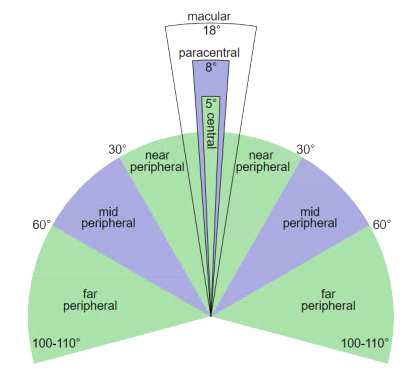
Source: https://upload.wikimedia.org/wikipedia/commons/4/4c/Peripheral_vision.svg


Realize that the car will go in the driver’s central vision when driving and where the driver looks.
The peripheral vision feeds all the other information on the road.
For example, when taking a long turn, the driver must look into the curve’s bend rather than outside the arc. As the driver looks into the turn, they will notice the car slowly following the same path.
A good driver’s eyes are always moving and constantly scanning the road, but they should also remember to focus on the path they want to take.
One mistake that novice drivers make is looking far too low. The driver’s eyes should be high, scanning the road. For example, the driver’s eyes should be looking several seconds ahead on highways. It will give the driver plenty of time to see and react to hazards on the road.
The vehicle operator should employ a search pattern when driving in heavy traffic. The driver’s eyes should scan all sides of the vehicle to ensure a safe distance between the driver’s vehicle and the vehicle ahead. The best way to do this is to keep a safe distance from the car ahead, allowing the driver to look around and follow the vehicle safely.
There are steps that one should take before starting to drive an engine.
In an automatic car, ensure it is in park mode, and a manual car is in neutral.
- Place your foot firmly on the brake
- Ensure the parking brake is off
- Insert the key and turn it till the engine turns on
- Let the engine idle for 20 seconds to heat up
- Ensure there are no warnings on the dashboard
Using this on Ontario roads — and on your road test
In the GTA you will use this in tight plaza parking lots, steep underground garage ramps, and stop-and-go traffic on roads like Kennedy or Eglinton where space is always being negotiated. Break the skill into small pieces and master each one at low speed, because low speed is where examiners watch it most closely too — most handling marks on a road test are won or lost below 30 km/h, in parking lots and quiet side streets, long before the highway portion starts.
Questions drivers ask us
Can you explain vehicle handling through visual tracking techniques in simple terms?
The vehicle operator should employ a search pattern when driving in heavy traffic.
How should I practise this as a new driver?
Start at low speed, in a quiet area, with your instructor or supervising driver beside you. Build the movement step by step until it feels routine, then use it in normal traffic. Rushing a new technique at full speed is how small errors turn into bad habits.
Will this come up on my G2 or G road test?
Very likely, yes. Handling is scored throughout the test — steering smoothness, speed control, braking, and how you position the car. Examiners are not looking for perfection; they are looking for calm, planned control, and for mistakes to be small and corrected early.