
Beginner Driver Education · Vehicle Handling
Mastering Left Turns: Safety and Techniques
Driviology Road Safety Education Team
What this actually means for you
Most new drivers learn this by feel after a few lessons. Understanding it on paper first makes those lessons click much faster. Following these streamlined steps and considering the specific road configuration, you can safely and effectively turn left in various driving situations. It is also one of the things examiners feel in the first minute: smooth, deliberate car control reads as a safe driver before anything difficult has even happened.
Left Turns Safety Guide | Vehicle Handling Insights
When making a left turn, it's essential to follow these steps to ensure safety and compliance with traffic regulations:
Prepare for the Turn:
- Position: Move into the leftmost lane appropriate for the turn.
- Signal: Activate your left turn signal well in advance to inform other drivers.
Approach the Intersection:
- Slow Down: Reduce your speed as you approach the intersection.
- Obey Signals: Follow all traffic lights, signs, and road markings.
Check Surroundings:
- Traffic: Ensure oncoming vehicles are stopped or far enough away (for two-way roads). Ensure no vehicles are approaching from the opposite direction (for one-way streets).
- Pedestrians and Cyclists: Look for pedestrians and cyclists crossing the street.
- Blind Spots: Perform a shoulder check for vehicles or bicycles in your blind spot.
Execute the Turn:
- Turn into the Correct Lane: Ensure you enter the appropriate lane without crossing into other lanes.
- Smooth Steering: Use controlled steering to stay within the lane markings.
Complete the Turn:
- Adjust Speed: Straighten your wheels and match the flow of traffic.
- Cancel Signal: Turn off your signal after completing the turn.
Specific Road Configurations:
Two-Way Road to Two-Way Road:
- Turn into the leftmost lane of the new two-way road.
Two-Way Road to One-Way Road:
- Turn into the leftmost lane of the one-way road.
One-Way Road to Two-Way Road:
- Turn into the leftmost lane of the new two-way road.
One-Way Road to One-Way Road:
- Turn into the leftmost lane of the new one-way road.
Following these streamlined steps and considering the specific road configuration, you can safely and effectively turn left in various driving situations.
A. Two-way road to a two-way road:
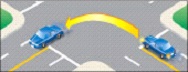
B. Two-way road to a one-way road:

C. One-way road to a two-way road:
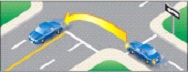
D. One-way road to a one-way road:
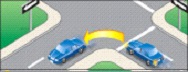
Using this on Ontario roads — and on your road test
In the GTA you will use this in tight plaza parking lots, steep underground garage ramps, and stop-and-go traffic on roads like Kennedy or Eglinton where space is always being negotiated. Break the skill into small pieces and master each one at low speed, because low speed is where examiners watch it most closely too — most handling marks on a road test are won or lost below 30 km/h, in parking lots and quiet side streets, long before the highway portion starts.
Questions drivers ask us
Can you explain left turns in simple terms?
Discover the best practices for making left turns safely. Understand traffic regulations, the importance of turn signals, and how to navigate intersections effectively.
How should I practise this as a new driver?
Start at low speed, in a quiet area, with your instructor or supervising driver beside you. Build the movement step by step until it feels routine, then use it in normal traffic. Rushing a new technique at full speed is how small errors turn into bad habits.
Will this come up on my G2 or G road test?
Very likely, yes. Handling is scored throughout the test — steering smoothness, speed control, braking, and how you position the car. Examiners are not looking for perfection; they are looking for calm, planned control, and for mistakes to be small and corrected early.